


Dubai Food Scene: Local Dates and Fish vs Michelin Stars (2026)
Then: The Simple Food Culture of Old Dubai
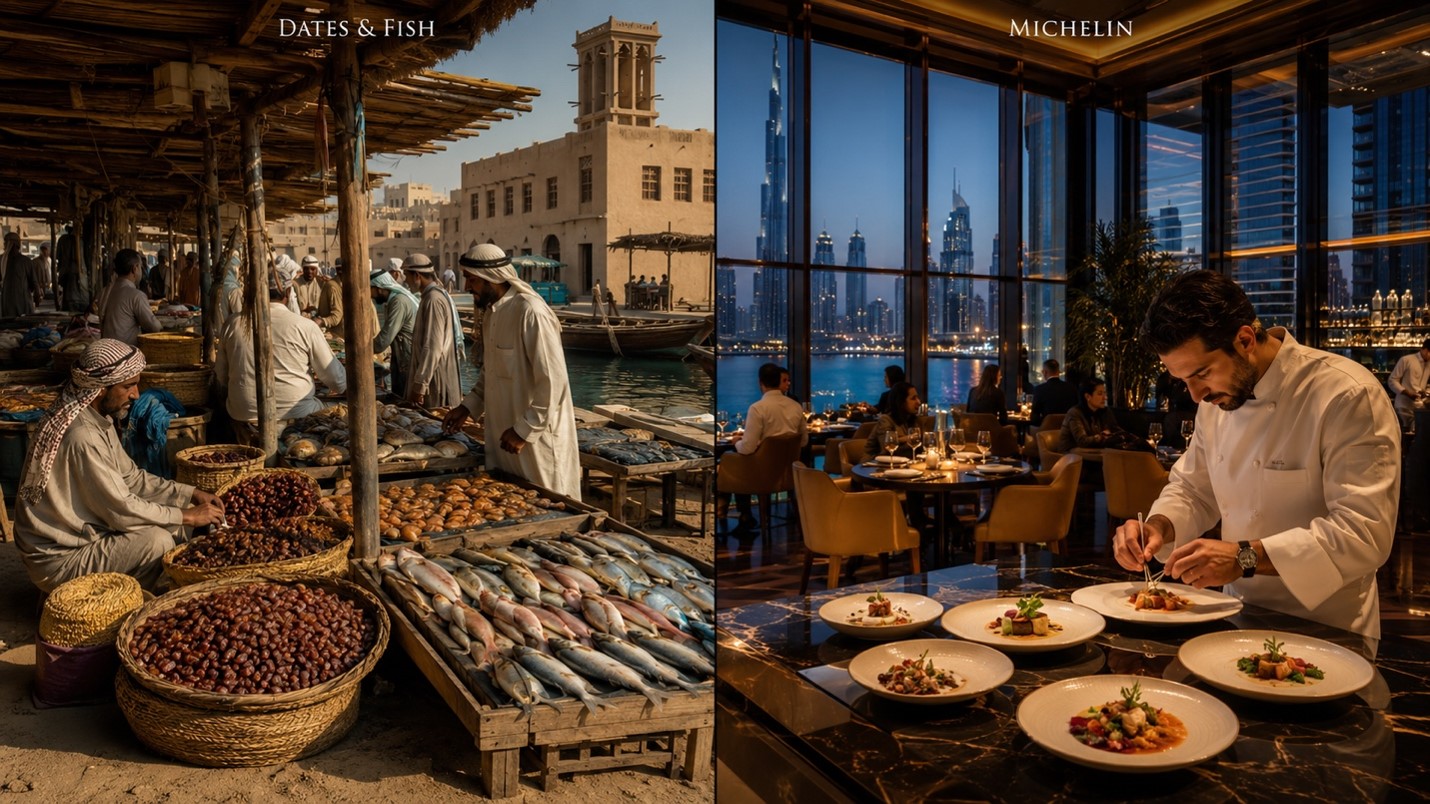
Before Dubai became a city of celebrity chefs and Michelin-starred restaurants, its food culture was rooted in simplicity, tradition, and the natural bounty of the Arabian Gulf and the desert. For generations of Emiratis and the early trading communities that settled along the creek, food was sustenance first and celebration second. The staple diet revolved around what the land and sea could provide: fresh fish caught daily from the Gulf, rice imported from India and Iran and cooked with fragrant spices, dates harvested from the palm groves that dotted the region, and camel or goat meat reserved for special occasions and communal feasts.
The signature dish of the era was machboos – slow-cooked spiced rice with fish or meat, often flavoured with dried limes, turmeric, and a blend of Gulf spices that varied from household to household and had been refined over centuries of trade with India and Persia. Harees, a simple porridge of wheat and meat slow-cooked to a smooth consistency, was another staple, particularly during Ramadan and celebrations. These dishes were prepared in family kitchens and served communally, often on large shared platters placed on floor mats where family members and guests would eat together with their hands in the traditional manner.
The concept of a restaurant in the modern sense barely existed in Dubai before the 1960s. Small tea houses and simple eateries near the creek served labourers, sailors, and traders with basic meals of rice, bread, and fish at low prices. Indian and Iranian immigrants who settled in Deira brought their own culinary traditions with them, adding biryanis, flatbreads, and slow-cooked curries to the available options. These modest establishments were functional rather than experiential – places to eat quickly and cheaply between working hours, not destinations to be savoured and remembered.
As Dubai began to grow in the 1970s, the food landscape started to diversify slowly. Hotel restaurants introduced international cuisine to the small but growing community of Western expatriates, and a handful of Indian and Pakistani restaurants opened in Deira catering to the expanding South Asian workforce. But the overall dining scene remained modest, shaped more by necessity than aspiration, and the idea that Dubai would one day host some of the world’s most celebrated chefs and restaurants would have seemed entirely fantastical to anyone eating a simple fish meal beside the creek in those years.
Now: Dubai as a Global Culinary Capital (2026)
In 2026, Dubai’s food scene is one of the most diverse, dynamic, and celebrated in the world. The emirate is home to over 13,000 restaurants representing cuisines from virtually every country on Earth, a staggering density of dining options that reflects the extraordinary cosmopolitan mix of Dubai’s resident population and its position as a global travel hub. From street-side shawarma stalls to multi-course tasting menus designed by internationally acclaimed chefs, Dubai offers a culinary range that few cities anywhere can match.
The arrival of the Michelin Guide in Dubai in 2022 marked a watershed moment in the city’s culinary story, providing formal international recognition for what residents and food lovers had known for years – that Dubai was producing restaurant experiences of genuine world-class quality. The Michelin Guide Dubai has since recognised dozens of restaurants across multiple star categories, covering a remarkable range of cuisines and concepts from refined Emirati cooking to Japanese omakase, French haute cuisine, and innovative Middle Eastern fusion. The recognition has both reflected and accelerated the ambition of Dubai’s dining scene.
Celebrity chef culture has taken deep root in Dubai. Gordon Ramsay, Nobu Matsuhisa, Massimo Bottura, Tom Kerridge, and scores of other internationally recognised culinary names have opened restaurants in the emirate, drawn by the combination of a sophisticated dining public, world-class hotel partners, and a market that genuinely values and rewards culinary excellence. The dining rooms of the city’s leading hotels – Atlantis The Royal, the Four Seasons, the Address Downtown – now rank among the most sought-after tables in the world, with reservations often required weeks in advance.
Alongside the fine dining revolution, Dubai has also emerged as a destination for authentic global street food and casual dining experiences. Global Village, Ripe Food Market, and a thriving network of food trucks and community markets have brought the flavours of Lebanon, Ethiopia, Mexico, Japan, Korea, and dozens of other culinary traditions to accessible, informal settings. Even the traditional Emirati food culture has experienced a renaissance, with a new generation of chefs celebrating and reinterpreting the dishes of dates, fish, and spiced rice that fed Dubai’s earliest communities. From simple sustenance to global culinary destination, Dubai’s food journey is as extraordinary as every other chapter of its story.
Contributed by GuestPosts.biz