


Dubai Real Estate: Mud Houses vs Tallest Towers (2026)
Then: Mud-Brick Homes and Wind Towers of Old Dubai
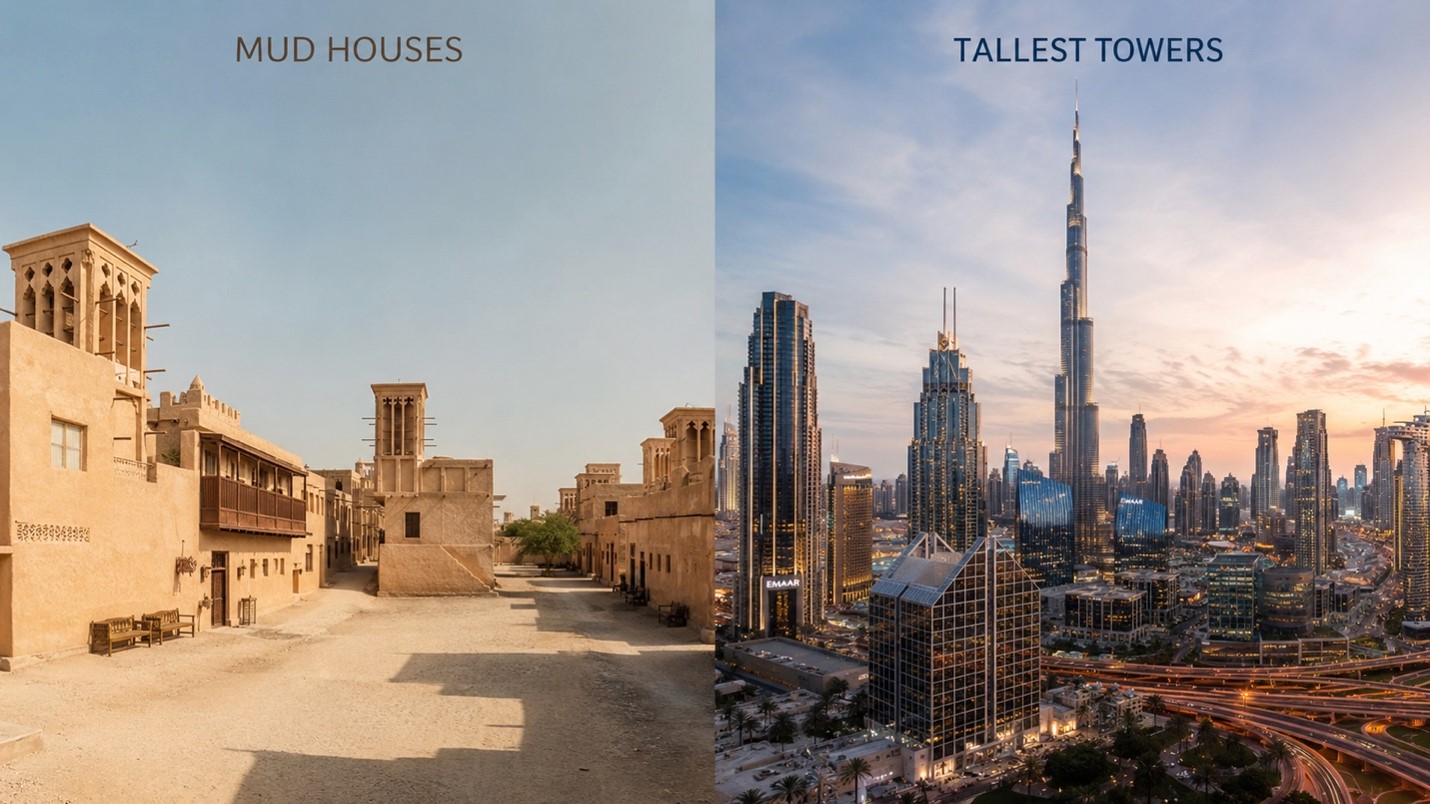
Before concrete, glass, and steel came to define Dubai’s skyline, the city was built from the earth beneath it. The traditional architecture of old Dubai was constructed primarily from coral stone, gypsum plaster, and sun-dried mud brick – materials sourced locally and shaped by centuries of accumulated wisdom about how to build for life in a hot, arid, coastal desert environment. Walking through the historic Bastakiya quarter today, now preserved and restored as the Al Fahidi Historical Neighbourhood, gives a rare glimpse into what residential Dubai once looked like: narrow lanes winding between low, thick-walled buildings topped by the elegant wind towers that served as the region’s original air conditioning system.
The wind tower, or barjeel in Arabic, was a masterpiece of passive climate engineering. Rising above rooftops on four open sides, these towers caught prevailing breezes from any direction and channelled cool air downward into the rooms below, creating a natural ventilation system that made the intense summer heat bearable without any mechanical assistance. The towers were not merely functional – they were also expressions of social status, with the wealthiest merchant families commissioning the tallest and most ornate examples. The Bastakiya district, originally settled by Persian traders from the Bastak region of Iran in the early twentieth century, remains the best-preserved example of this architectural heritage in Dubai.
For most ordinary residents of Dubai in the early twentieth century, housing was far more basic than even these merchant homes. Fishing families and labourers lived in simple barasti structures – shelters built from woven palm fronds that provided shade and ventilation but little else in the way of comfort or permanence. These homes were easy to construct and easy to abandon, suited to a semi-nomadic lifestyle that moved with the seasons and the availability of food and water. There was no concept of real estate as an investment or a commodity – a home was simply a place to sleep, to eat, and to shelter from the elements.
Even as late as the 1960s and into the 1970s, Dubai’s residential landscape remained largely low-rise. The first concrete buildings appeared gradually as cement and imported construction materials became more accessible following the arrival of oil revenues, but the city still sprawled horizontally rather than reaching skyward. Land was abundant, ambition was growing, and the architectural revolution that would transform Dubai into a vertical city was still gestating in the minds of its rulers and their advisors.
Now: Dubai’s Real Estate Market in 2026
In 2026, Dubai’s real estate market is one of the most dynamic, valuable, and globally watched property markets in the world. The skyline that once consisted of mud-brick homes and palm-frond shelters now hosts over 300 skyscrapers above 150 metres in height, making Dubai one of the cities with the highest concentration of supertall buildings on Earth. The Burj Khalifa at 828 metres remains the world’s tallest building, but it is surrounded by a forest of towers that would individually dominate the skylines of most other world cities – structures like the Princess Tower, the 23 Marina, the Elite Residence, and the Cayan Tower that represent extraordinary feats of engineering and design.
The residential real estate market in Dubai has undergone a profound transformation in the past decade. Following the correction of the global financial crisis in 2008 and the subsequent recovery, Dubai’s property market entered a sustained period of growth driven by strong demand from international investors attracted by zero property taxes, high rental yields, transparent ownership laws, and the emirate’s overall quality of life proposition. The introduction of long-term residency visas linked to property investment – including the Golden Visa programme – further stimulated international demand, with buyers from across Europe, Asia, Russia, and the Middle East investing in Dubai’s residential market at record levels.
New master-planned communities have emerged across the emirate’s expanding geography, each offering a distinct lifestyle proposition. Arabian Ranches, Emirates Hills, Mohammed Bin Rashid City, Dubai Hills Estate, and Creek Harbour are among the landmark developments that have created entire new neighbourhoods from scratch, complete with schools, retail centres, parks, community facilities, and carefully landscaped streetscapes. Off-plan sales have become a dominant feature of the market, with developers selling units in projects that exist only as renderings and architectural models to buyers who trust in Dubai’s track record of delivery.
From mud-brick homes that dissolved back into the earth when abandoned to a forest of supertall towers that pierce the clouds and a real estate market that attracts billions in international investment annually, Dubai’s property story is the most visible and dramatic dimension of its overall transformation. Every tower that rises from the desert sand is not just a building – it is a chapter in the ongoing story of a city that refused to accept any ceiling on its own ambition.stPosts.biz
Contributed by GuestPosts.biz