


The UAE Ranks 23rd In The World For Quality Of Life – And The Story Behind That Number Is Remarkable
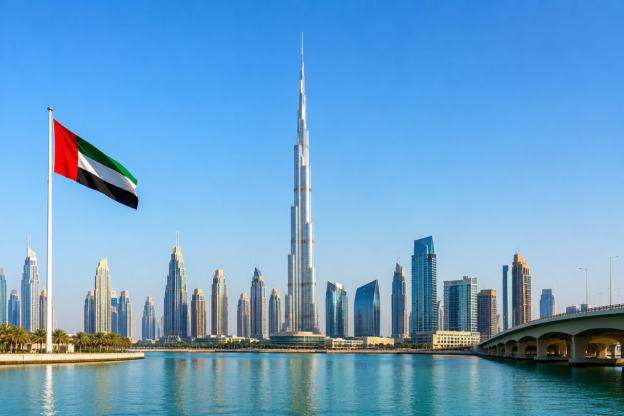
Rankings are everywhere, and most of them are easy to skim past. But every once in a while a number lands with enough weight that it is worth pausing on, sitting with, and actually thinking about. The UAE’s 23rd place ranking in the 2026 Best Countries Index for quality of life is one of those numbers. Not because it puts the UAE at the very top of the list – Sweden leads, followed by Denmark and Canada, and eight of the ten highest-ranked countries are European nations with centuries of institutional development and welfare state infrastructure behind them. The number is remarkable for a different reason entirely: what the UAE had to start from, how recently it started, and how far it has travelled in almost no time at all.
The 2026 Best Countries Index, published by US News and World Report in partnership with the Wharton School at the University of Pennsylvania, surveyed more than 15,000 adults across 33 countries, asking them a direct question: where in the world do people enjoy the best quality of life? Respondents considered affordability, employment opportunities, family friendliness, political stability, and overall wellbeing. The UAE came 23rd. First in the entire Middle East. Ahead of South Korea. Ahead of Italy. Ahead of China. Ahead of the United States of America. For a country that has been building its modern infrastructure, its institutions, and its international population within a single generation, that placement is not just a good result. It is an extraordinary one.
Why Perception Matters Even More Than Statistics
What makes this ranking particularly interesting is its methodology. It is explicitly perception-based – it measures what people around the world believe about the quality of life in different countries, not what government statistics say should be true. That distinction matters enormously. A country can have excellent GDP per capita figures and still be perceived as a difficult, stressful, or unwelcoming place to actually live. The UAE’s 23rd place finish means that people who were surveyed – thousands of adults across dozens of countries, most of whom are not UAE residents – have formed a positive view of what life here looks and feels like. That is a reputational achievement as much as a developmental one, and reputation of this kind is both hard to build and extraordinarily valuable once established.
The dimensions that drive positive perception of UAE quality of life are consistent with what residents who live here already know. Safety is consistently cited as one of the country’s defining characteristics – the 99.9 percent safety rating that Dubai recorded in 2026 is not just a domestic talking point but a globally recognised reality that filters into how people outside the country think about the UAE as a place to raise a family or build a career. Connectivity – the ability to fly almost anywhere in the world directly from Dubai International Airport, the world’s largest by international seat capacity – adds a dimension of freedom and access that residents from countries with less connected airports genuinely notice and value. Infrastructure quality, from roads to hospitals to schools to digital government services, rounds out a physical environment that matches or exceeds what is available in countries that have been building their cities for centuries.
What This Means for Talent, Business and the Future
For employers based in the UAE, the 23rd place ranking is a recruiting tool that goes beyond the salary conversation. Senior professionals evaluating a career move are no longer asking only what the package is. They are asking what school their child will attend, how safe the streets are, what the healthcare system looks like, and whether the country they are moving to offers the kind of stable, long-term environment in which a family can genuinely put down roots. The UAE’s answer to all of those questions is increasingly compelling, and this ranking makes that answer official and internationally visible.
The broader competitive dynamic is also worth understanding. Countries and cities around the world are competing for the same pool of globally mobile skilled professionals, entrepreneurs, and investors. Those who can offer economic opportunity – career growth, business environment, tax efficiency – have always had an advantage. But as the generation of workers who grew up during economic instability, political turbulence, and declining public services in established Western countries begins to make its career choices, quality of life has moved from a secondary consideration to a primary one. The UAE ranks 23rd in the world on that primary consideration. It ranks first in its entire region. And it achieved that position in roughly fifty years, starting from almost nothing. That is the number worth sitting with.
Contributed by GuestPosts.biz