


Dubai’s RTA Approves Five-Year Plan to Green 63 Transit Hubs by 2030
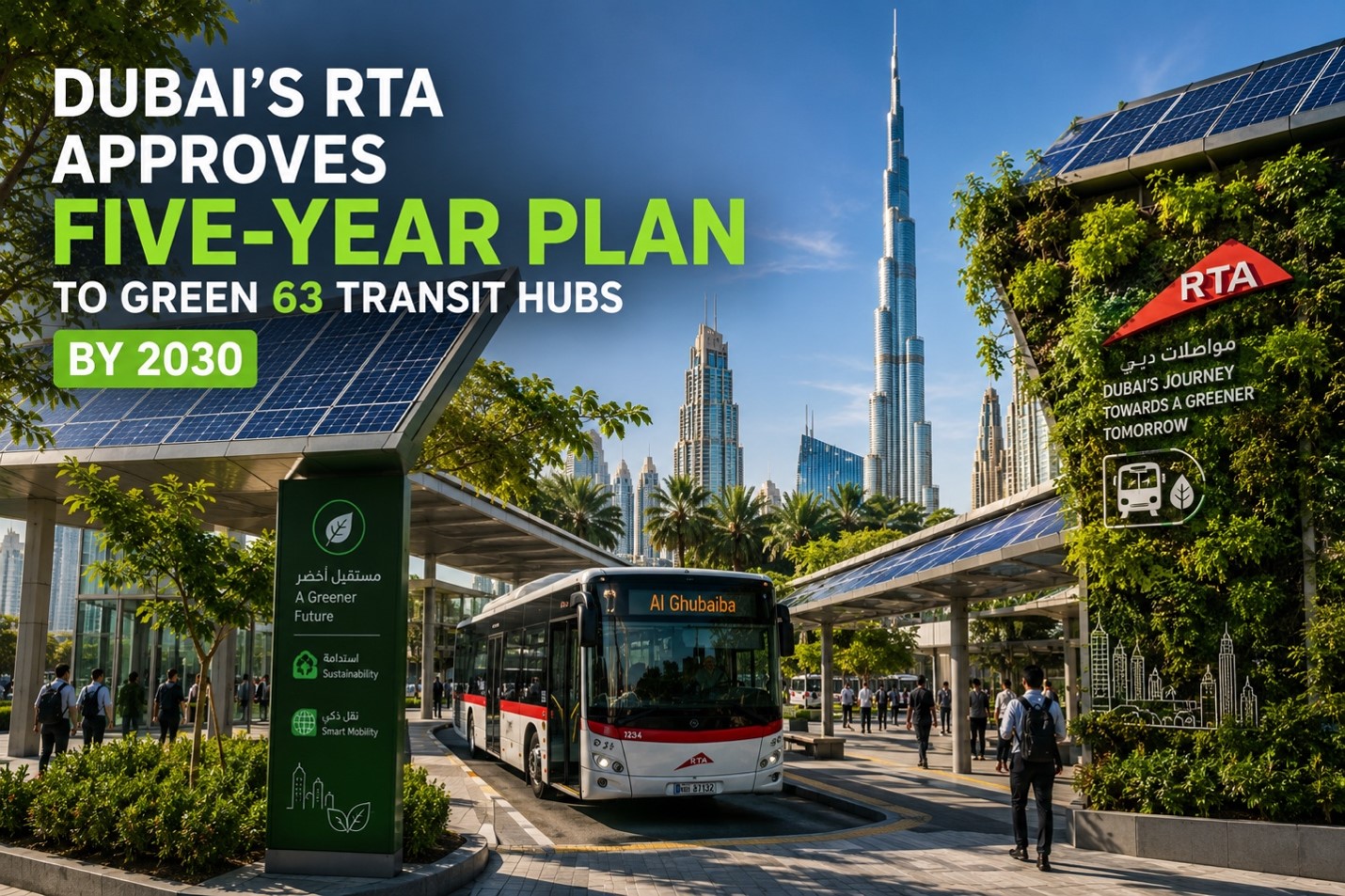
Dubai’s Roads and Transport Authority has signed off on a sweeping new Soft Mobility Plan, a five-year initiative that will transform the areas around 63 public transport stations into more walkable, cyclable spaces by 2030. The move is one of the clearest signals yet of the emirate’s intent to loosen its historic reliance on private cars and reshape how residents get to and from Metro and bus stops.
At the heart of the plan is what transport planners often call the “first- and last-mile” problem: the gap between someone’s front door and the nearest train or bus stop. Even the most efficient transit network struggles to attract riders if that final stretch feels unsafe, exposed to the heat, or simply inconvenient. Dubai’s answer is to redesign the immediate surroundings of 63 stations with shaded pedestrian walkways, dedicated cycling tracks, safer street crossings, secure bicycle parking, and landscaped public areas. Shared mobility stations for services like Careem Bike and various e-scooter operators will also be woven into the mix, giving commuters more ways to complete that final leg of a journey without a car.
The scale of the project is significant. Twenty-five residential communities will be directly connected to key transport hubs under the plan, meaning the upgrades aren’t confined to a handful of showcase districts but spread across a meaningful portion of the city’s residential fabric. This builds on work that’s already underway or completed: improvements have been finished around 37 Metro stations and across nine residential communities, while additional upgrades are currently progressing in areas including Dubai Marina, Naif, Al Rigga, Al Murar, and Al Muraqqabat.
What makes this initiative notable isn’t just its size, but where it sits within Dubai’s broader planning philosophy. The Soft Mobility Plan is explicitly framed as part of the Dubai 2040 Urban Master Plan, the long-range blueprint that governs how the city expects to grow over the next two decades. That plan places a heavy emphasis on liveability, green space, and reducing car dependency, so the RTA’s station-area upgrades function as a practical, on-the-ground expression of goals that might otherwise stay abstract. Rather than a single flagship project, this is infrastructure spending distributed across dozens of neighborhoods, aimed at making sustainable transport a viable everyday choice rather than a special-occasion one.
There’s also a public health angle that officials have leaned into. RTA representatives have tied the plan to promoting healthier lifestyles, pointing to the fact that walking or cycling even short distances to a transit stop, rather than driving door-to-door, adds incidental physical activity to a daily routine. In a city where extreme summer heat has historically discouraged outdoor movement, the emphasis on shaded walkways is a practical acknowledgment that “walkable” only works in Dubai if it also means “shaded” and “cool enough to be tolerable.”
For residents, the tangible effects will likely show up gradually rather than all at once, station by station, community by community, as construction rolls out through 2030. But cumulatively, the plan represents a meaningful shift in how easy it will be to live in Dubai without a car for daily errands and commuting. Cities that successfully reduce car dependency tend to do so not through one dramatic policy, but through hundreds of small, connected improvements that make walking, cycling, and transit feel like the path of least resistance. Dubai’s Soft Mobility Plan is a bet that the same logic applies here.
Whether the initiative meets its 2030 timeline in full remains to be seen, and infrastructure projects at this scale often face delays or budget adjustments along the way. Still, the fact that 63 stations and 25 communities are already slated for upgrades, on top of work already completed, suggests this isn’t a symbolic gesture but a genuine attempt to rewire how people move through the city.
Contributed by GuestPosts.biz